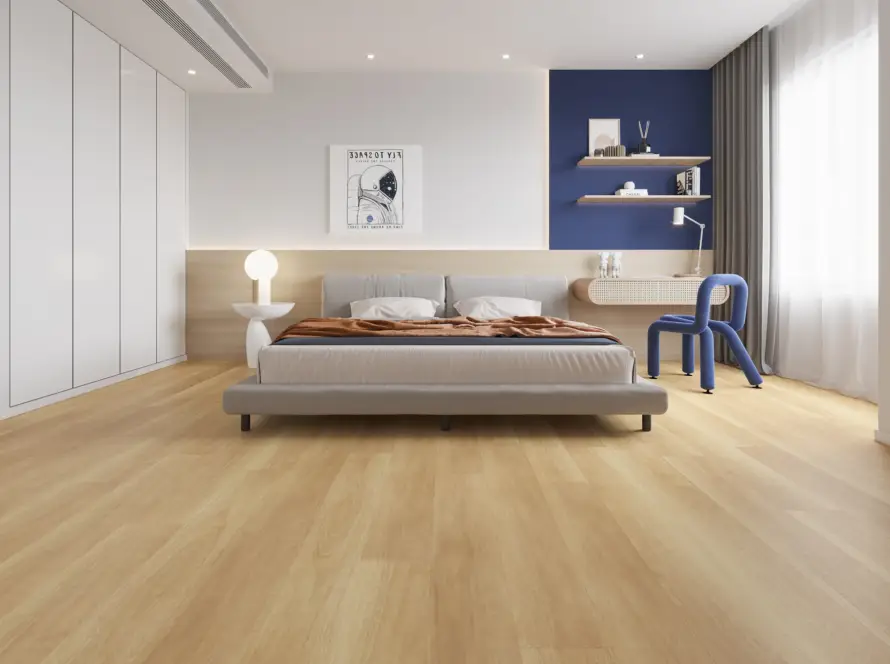
Herringbone vs chevron flooring comes down to plank shape and pattern alignment: herringbone uses rectangular pieces in a broken zigzag, while chevron uses angle-cut pieces that meet in a continuous V. Both can create a premium parquet look, but they affect installation time, waste, cost, and product selection in different ways.
If the two patterns look similar at first glance, that is normal. Many designers, retailers, and project buyers use both names for any zigzag floor. The practical difference matters because it changes how the floor is made, packed, installed, and priced. This guide will explain true herringbone flooring, true chevron flooring, and parquet-look SPC, LVT, vinyl, and laminate options that recreate the style with faster installation.
Herringbone vs Chevron: The Quick Difference
The quick difference is simple: herringbone is made from rectangular pieces that meet at right angles, while chevron is made from angled pieces that meet point to point. Herringbone creates a broken zigzag. Chevron creates a continuous arrow or V shape.
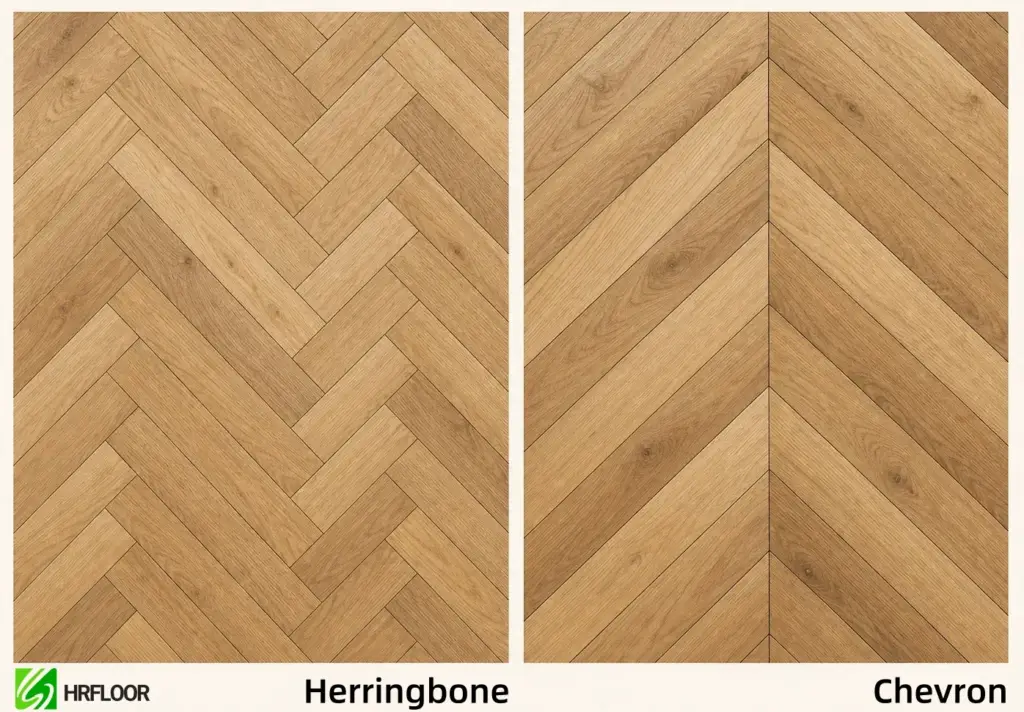
In a true herringbone pattern, each plank keeps a straight rectangular end. Installers place one plank against another at a 90-degree angle, so the end of one board meets the side of another. The result has movement and texture because the pattern steps from side to side.
In a true chevron pattern, each plank end is cut at an angle (45 or 60 degrees). A left piece and a right piece meet at a point, so the center line looks clean and continuous. This creates a sharper, more directional design.
| Comparison | Herringbone flooring | Chevron flooring |
|---|---|---|
| Plank shape | Rectangular pieces | Angle-cut left and right pieces |
| Pattern | Broken zigzag | Continuous V or arrow |
| Visual feeling | Classic, textured, layered | Clean, directional, architectural |
| Installation | Still needs planning, but usually more forgiving | Requires stricter alignment and matching |
| Cost | Higher than normal plank, but lower than chevron | Often higher because of cutting, waste, and labor |
That difference affects more than the look. It also affects carton planning, left and right board matching, sample board design, installation documents, and the way retailers explain the product in a showroom.
What Is Herringbone Flooring?
Herringbone flooring is a parquet-style floor pattern made from rectangular pieces laid in alternating directions. The ends of the boards meet the sides of other boards, creating a broken zigzag that resembles the bones of a fish.
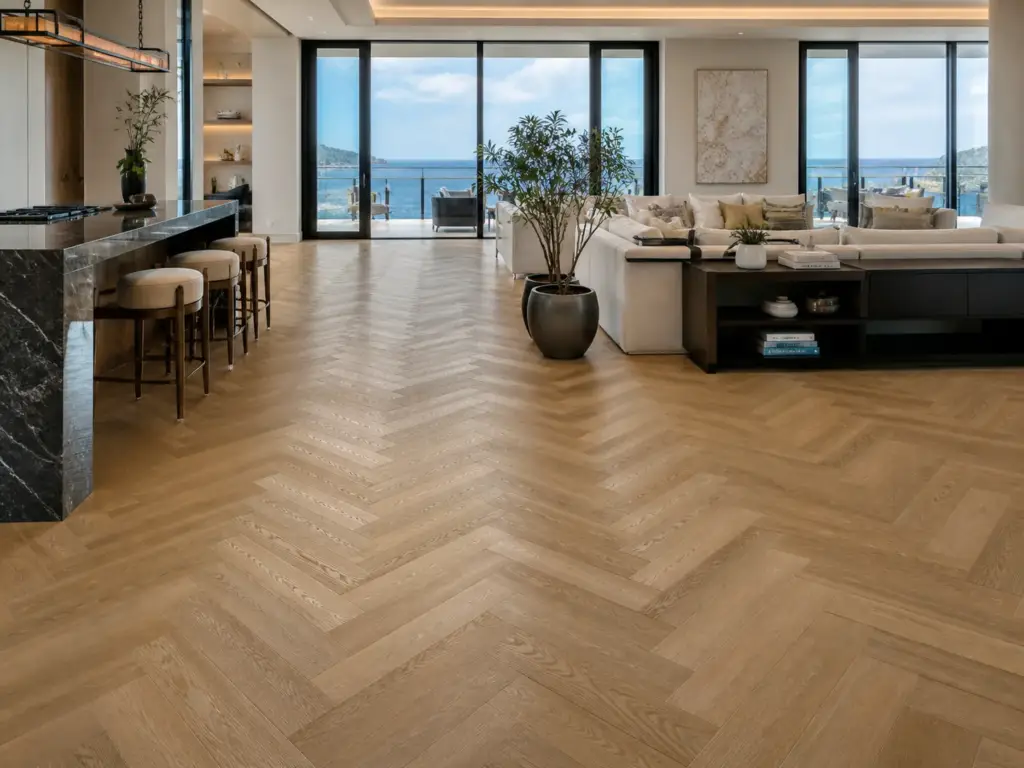
Plank shape and layout
Herringbone flooring uses straight rectangular pieces. The installer does not need each plank end to be cut into a point. Instead, the pattern comes from placing one board perpendicular to the next.
This makes herringbone flexible across many product categories. It can be made with hardwood, engineered wood, laminate flooring, LVT flooring, vinyl flooring, and SPC flooring. The product format may be traditional glue-down, floating click-lock, or another installation structure depending on the material. For SPC and laminate flooring, herringbone often requires A and B planks or a special locking design
Visual effect
Herringbone feels classic because it has been used in parquet flooring for a long time. It brings movement to the room without creating a single strong direction. That makes it useful in living rooms, apartments, boutiques, restaurants, hotel rooms, and retail spaces where the floor should feel designed but not too formal.
In small spaces, herringbone can make the floor feel more detailed. In large spaces, it can prevent a plain wood-look floor from feeling flat. For retailers and distributors, it is often a strong showroom pattern because customers can understand the upgrade quickly.
Review HRFLOOR LVT herringbone flooring options and ask for pattern samples, technical datasheets, and installation guidance before confirming a product line.
What Is Chevron Flooring?
Chevron flooring is a parquet pattern made from angle-cut pieces that meet in a continuous V. The ends of the planks are usually cut at matching angles, so the left and right pieces form a clean point along the center line.
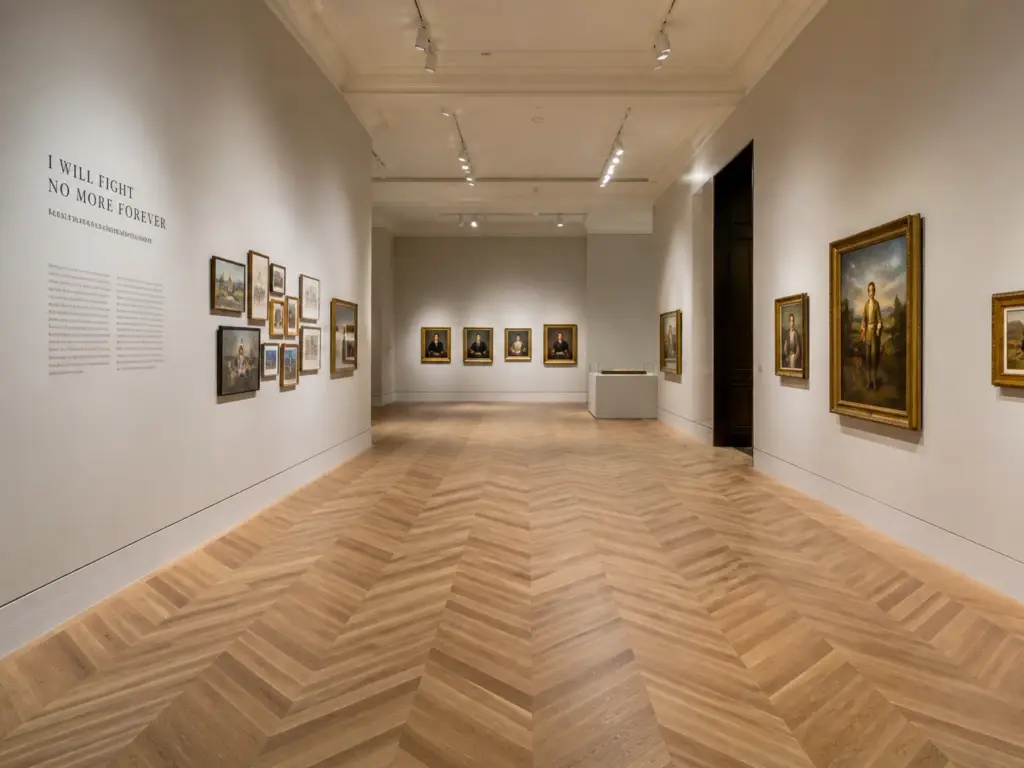
Plank shape and layout
True chevron flooring needs matched left and right pieces. The angle may vary by product design, but many guides describe a 45-degree or 60-degree cut as a common reference point. The key detail is not the exact number. The key detail is that the plank ends are angled and must meet precisely.
Because the pieces meet at points, chevron has less tolerance for small alignment mistakes. If the first rows move out of line, the V shape becomes visibly uneven. That is one reason chevron flooring cost is often higher than herringbone installation cost.
Visual effect
Chevron creates a stronger visual direction than herringbone. The continuous V can guide the eye down a hallway, toward a display wall, or through a hotel corridor. It often feels cleaner, sharper, and more architectural.
That makes chevron useful for modern interiors, luxury apartments, retail stores, hospitality spaces, and feature areas where the floor should lead the layout. It can also make narrow spaces feel longer when the V direction is planned well.
The trade-off is that a strong directional pattern needs careful design planning. Room size, entrance direction, center lines, expansion gaps, and furniture layout all affect how the pattern reads after installation.
Installation and Cost: Why Chevron Usually Costs More
Chevron usually costs more because it asks for more precision. The points must meet cleanly, the angles must stay consistent, and the installation layout must keep the center line under control.
Layout precision
With herringbone, the pattern has a stepped movement. Small variations can still be visible, but the broken zigzag is more forgiving than a continuous V. With chevron, every point draws attention to the center line.
That matters on jobsites. If a wall is not square, if the subfloor is uneven, or if the first rows drift, chevron can show the problem quickly. Installers may need more layout time before the first plank is fixed.
Cutting and material waste
Chevron can create more waste because of angled cuts and strict direction matching. Herringbone also needs waste allowance, especially at walls and borders, but the rectangular format may be simpler to manage.
Many retail and installation guides use extra waste allowances as planning examples. A common reference is around 10-15% waste for herringbone and 15-20% or more for chevron. Project buyers should treat these as starting points and confirm with the installer, supplier, and floor plan.
Labor and jobsite time
Both patterns take longer than standard straight-lay flooring. Chevron usually adds more time because the pieces must meet point to point. If the product uses separate left and right boards, the installer also needs to manage direction and sequence.
In commercial renovation, that extra time can affect store reopening, hotel corridor access, or apartment turnover. A floor that looks slightly more premium may not be the best choice if the project schedule is tight.
FAQ
No. Herringbone flooring uses rectangular pieces arranged in a broken zigzag, while chevron flooring uses angle-cut pieces that meet in a continuous V. They are both parquet-style patterns, but the plank geometry is different.
The main differences are board shape, center-line appearance, installation precision, and cost. Herringbone uses rectangular boards and looks more staggered. Chevron uses angled boards and creates cleaner points. Chevron is usually more precise and often more expensive.
Chevron is not universally better than herringbone. Chevron is better when you want a strong directional V pattern. Herringbone is better when you want classic movement, a more textured look, and often a more forgiving installation.
Chevron is usually more expensive than herringbone because it often needs angle-cut pieces, stricter alignment, more careful planning, and higher waste allowance. The final price still depends on material, product format, installer cost, and room layout.
Yes. SPC flooring can be made in herringbone, chevron, and parquet-look designs. Buyers should confirm whether the product is a true patterned plank system or a parquet-look format, then check the click system, sample board, datasheet, and installation guide.
Välinge 5G or push-down click systems are ideal for Chevron flooring, as they significantly minimize installation time. Conversely, Herringbone flooring pairs better with traditional A/B planks or modern universal click systems.