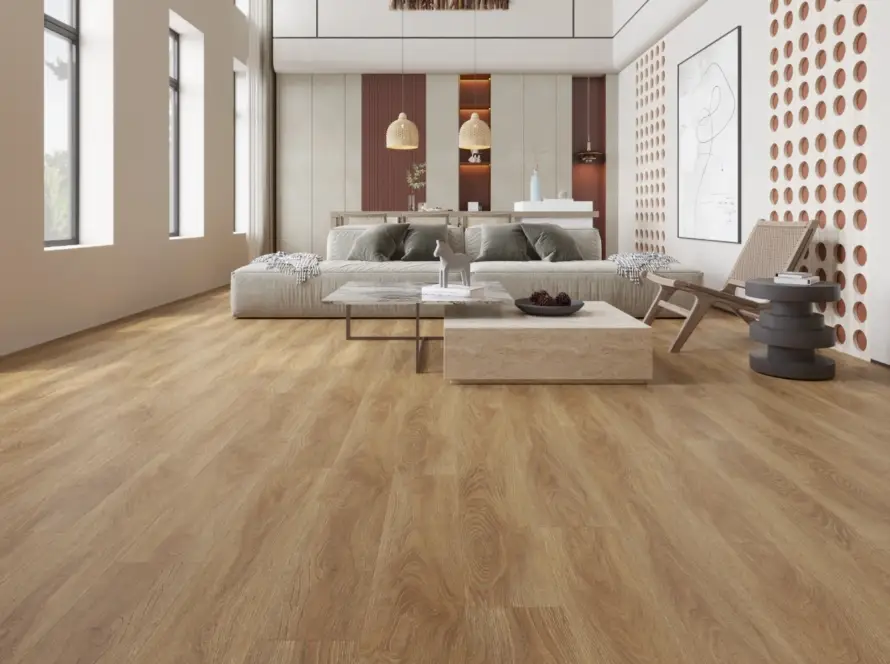
MFB flooring refers to mineral fiber board flooring. It was made from cured resin powder, glass fiber, and MDI adhesive through high-temperature, high-pressure thermosetting.
Mineral Fiber Board (MFB) flooring is designed to combine super waterproof performance, B1 fire resistance, and zero added formaldehyde. This guide will introduce the MFB flooring and compares it with SPC flooring and laminate flooring.
What MFB Means in Flooring
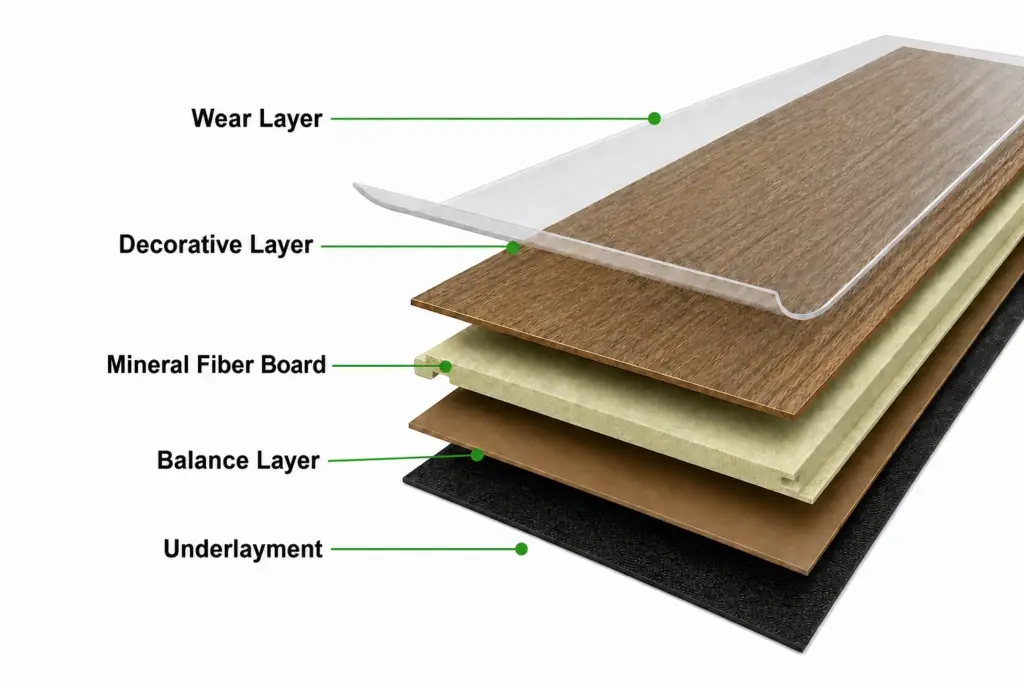
MFB stands for mineral fiber board flooring. This simple definition is important because MFB flooring differs from both laminate flooring and SPC flooring in core structure.
MFB uses a thermoset mineral fiber board. Laminate flooring is usually built on a wood-fiber-based core, while SPC flooring uses a stone-plastic rigid core. From a flooring materials perspective, MFB is therefore an independent board type, not just a modified laminate or a variation of SPC.
Its layered structure is also quite similar to laminate flooring, but the core material is different:
- Wear Layer: A transparent protective surface that improves scratch resistance, stain resistance, and daily wear performance.
- Decorative Layer: A printed design film that gives the floor its wood, stone, or other visual appearance.
- Mineral Fiber Board: The main structural core, made from cured resin powder, glass fiber, and MDI adhesive under high temperature and high pressure. It provides stability, waterproof performance, fire resistance, and zero added formaldehyde characteristics.
- Balance Layer: A balancing bottom layer that helps support dimensional stability and protects the underside of the board.
- Underlayment: Common materials include IXPE, EVA, and XPS, which help improve foot comfort and enhance sound insulation.
Key Features and Advantages
MFB flooring is designed for balanced performance in modern interiors. Its key advantages include:
- 100% waterproof mineral fiber board core
- B1 fire resistance for better interior safety
- Zero added formaldehyde for improved indoor air quality
- High wear resistance and better scratch protection
- Lower-density core, making each plank lighter than many SPC flooring products
Compared with laminate flooring, MFB flooring performs better in wet areas because it does not rely on a traditional wood-fiber core. It is more suitable for kitchens, bathrooms, laundry rooms, apartments, and offices where moisture resistance, fire performance, and environmental safety matter.
Compared with SPC flooring, MFB flooring keeps waterproof performance while offering a more wear-resistant surface and lighter board weight. This makes it easier to handle, transport, and install, while still providing durable daily-use performance.
Flooring Comparisons: MFB vs SPC vs Laminate
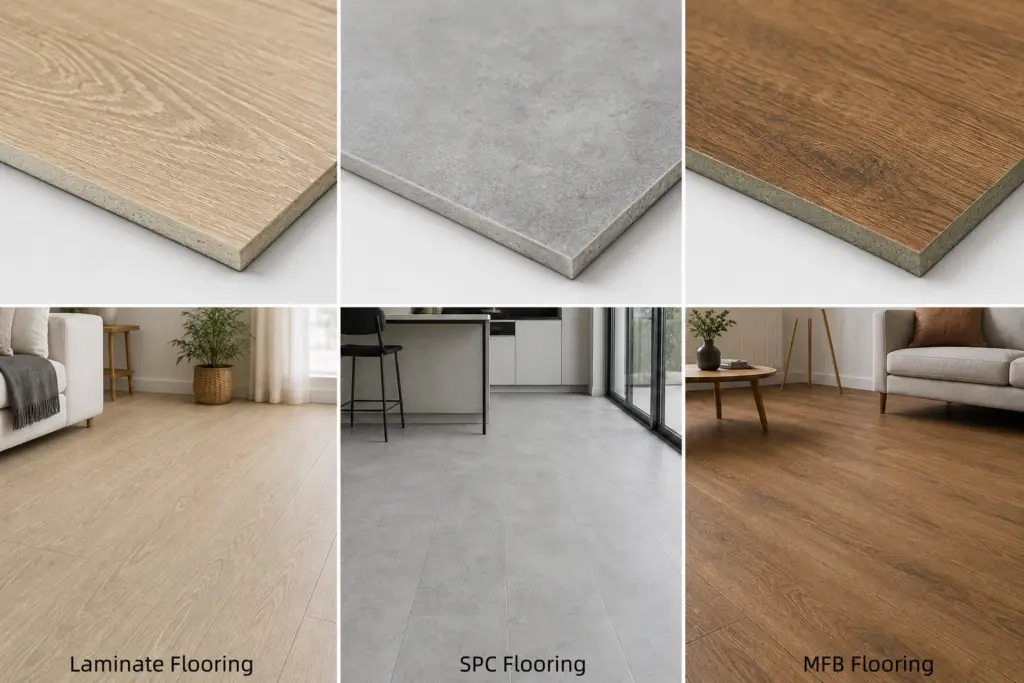
A comparison table makes the differences easier to scan. The price and thickness values below follow the approved task facts exactly. The other rows use cautious educational descriptions rather than absolute rankings.
| Item | MFB flooring | SPC flooring | laminate flooring |
|---|---|---|---|
| Typical Price | USD 10-12/m2 | USD 5-9/m2 | USD 3-6/m2 |
| Thickness | 8 mm | 3.5-10 mm | 8 mm, 10 mm, 12 mm |
| Main Composition | Cured resin powder, glass fiber, and MDI adhesive | PVC resin powder, calcium powder | Wood fiber, adhesive |
| Moisture Position | Approved as having super waterproof performance | Often discussed as a moisture-tolerant option in the market | Usually chosen more carefully in higher-moisture areas |
| Fire and Environmental Notes | B1 fire resistance and zero added formaldehyde | B1 fire resistance and no formaldehyde | Not fire-resistant; formaldehyde levels vary depending on the core material. |
This table shows the basic tradeoff. Laminate flooring usually sits at the lowest price range here. SPC flooring covers a broad thickness and price range. MFB sits higher in price, but it is presented around a more specific performance mix.
For readers comparing structures in more detail, HRFLOOR also shares related technical resources in its resource center.
Where MFB Flooring Fit Best
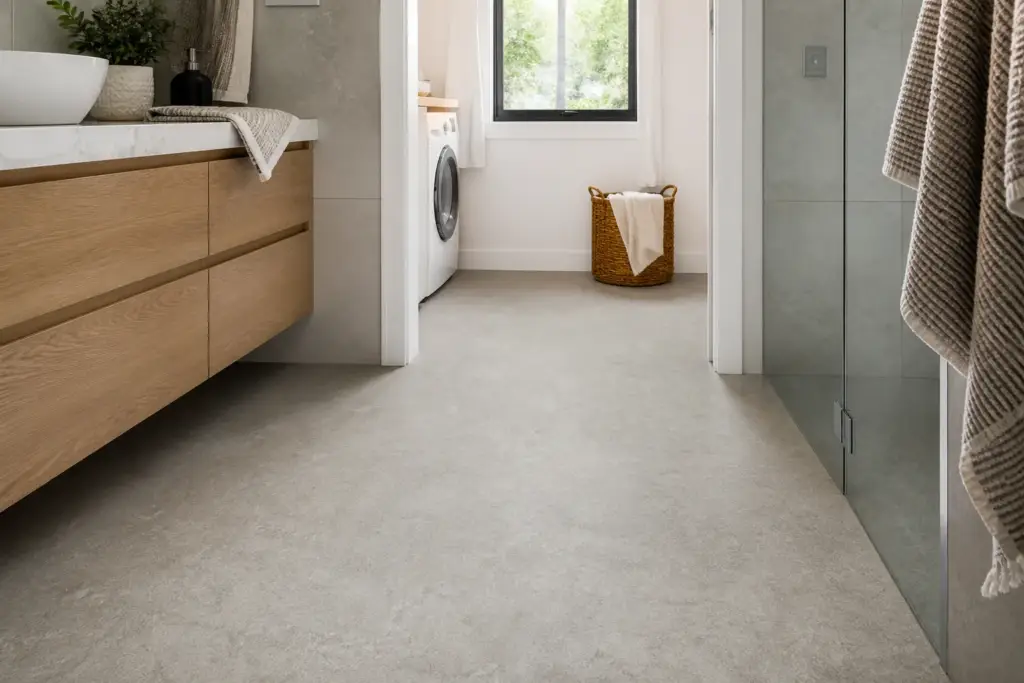
MFB flooring will be relevant in interior spaces where moisture, fire behavior, and environmental considerations all matter. Examples may include humid rooms, moisture-prone interiors, or spaces where the material specification puts extra focus on fire and emission concerns.
That doesn’t mean it is the right answer for every room. Real suitability still depends on the full floor system, site condition, installation method, and the latest product documents. It is better to treat MFB as a specialized material option, not a universal replacement for every floor category.
FAQ
The core is commonly described as highly water-resistant, and some suppliers market it as waterproof. However, installed-floor performance depends on the formula, joints, edge treatment, subfloor, and installation. Ask for test results covering the exact product.
No. MFB uses a Mineral Fiber Board core, while SPC uses a rigid composite core made mainly from limestone powder, PVC, stabilizers, and additives. Both can offer good moisture performance, but their material structure and manufacturing methods differ.
It may be a better fit where moisture and fire resistance are priorities. Laminate remains a practical option for dry rooms, broad design selection, and cost-sensitive projects. The right choice depends on the room and product specification.
That depends on the product structure and installation guide. Some planks may include attached IXPE underlayment, while others may require a separate underlayment roll.